







【Nepal】 Flash Floods – Relief Supplies and Medical Assistance Begin
2026.08.31
A-PAD sent two teams to support areas affected by the catastrophic floods and mudslides in Nepal. The first team arrived in Kathmandu on August 27, 2026, and conducted needs assessments in Nuwakot district. Starting August 29, with permission from the local government, the teams began distributing relief supplies and providing medical assistance.
Relief Supplies Distribution
On August 29, 2026, A-PAD procured relief supplies including food and hygiene items for 300 people in Kathmandu.
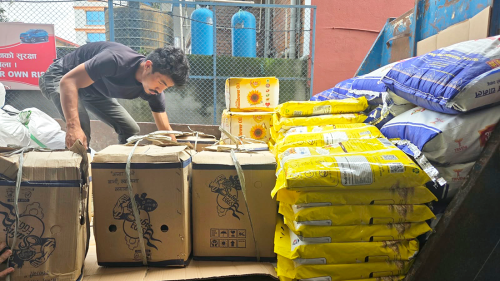
The team then met with government officials in Bidur, Nuwakot district, to register the relief supplies and make arrangements for direct delivery to Rasuwa district. Meanwhile, the team attempted to enter the town of Bidur on foot, but the roads were cut off and impassable and they ended up taking a detour to reach Betrawati.
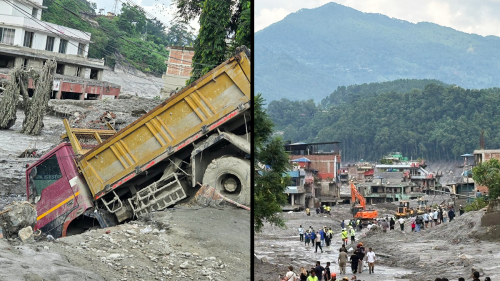
Bidur, Nuwakot District
It took the team hours to reach Kalikastan in Rasuwa district from Bidur due to heavy rain, flooding, and rocky terrain.
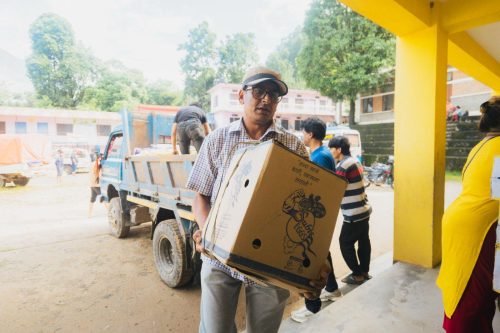
Upon arrival, the team handed over the relief supplies at a local high school. The high school is being used as a government supply receiving center, and of its 550 students, 120 lost family members. The students, having nowhere else to go, are staying with relatives, while about 30 are staying in other facilities, cared for by local residents.
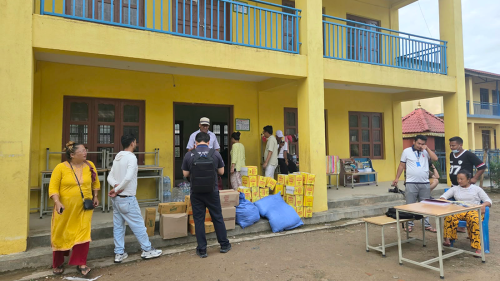
Shree Neelakantha Higher Secondary
The team conducted needs assessments conducted at different evacuation centers and identified the following items as particularly high priority:
– Hygiene kits
– Mattresses, blankets, towels
– LP gas for cooking
– Clothing
– Solar lanterns and chargers
Across the affected region, critical supplies are scarce, with the restoration of electricity as the most urgent priority.
During an assessment of Betrawati in Nuwakot District, the A-PAD team reported widespread devastation. The district’s primary major roads, three schools, government facilities,shops, and houses were nearly entirely destroyed. Driven by massive mud and debris, the local river overflowed, rising approximately 15 meters above its banks and widening to several hundred meters as it surged through the area.
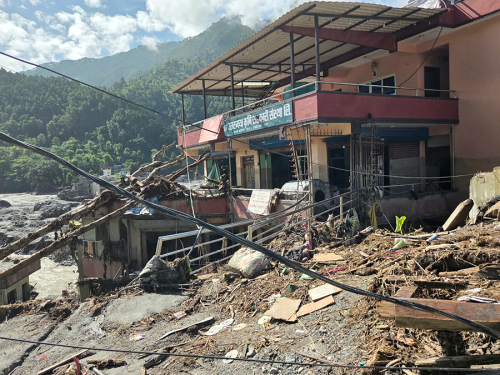
Betrawati in Nuwakot district suffered catastrophic damage
Although aid supplies are gradually beginning to reach the disaster-stricken areas from various sources, the northern regions remain largely isolated and require prolonged support.
Medical Assistance
On August 29, 2026, another A-PAD team visited Nepal APF Hospital in Kathmandu and held meetings with local healthcare practitioners. The team assessed the geographical vulnerability of the affected areas and the worsening shortage of medical supplies, and discussed how to deploy aid supplies.
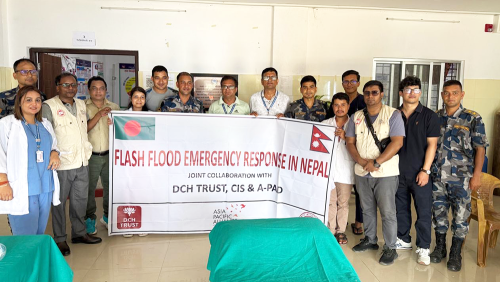
Nepal APF Hospital
Dr. Kalu Singh Khatri (BDS, MDS), a member of the Nepal Medical Association, pointed out that the public health challenges following the floods can be challenging. He emphasized that new health risks will surface after the water recedes. Many victims evacuated leaving behind their prescription medications, leaving non-communicable diseases untreated.
On the other hand, since there was little need for triage for those injured by trauma, the team determined to prioritize providing medical assistance to victims who need medication.
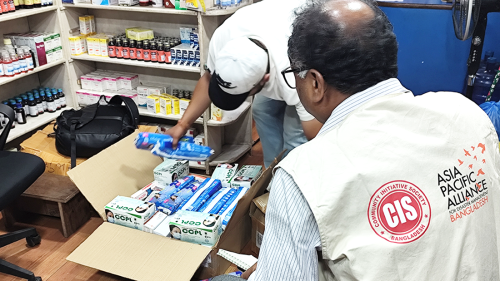
A-PAD collected lists of necessary medicines from local healthcare workers and procured them. Through its existing network,A-PAD also decided to provide medical supplies in three cities.
On August 30, the team traveled by car from Kathmandu to Bidhur in Nuwakot district. From there on, the roads were damaged by flooding and vehicle access was completely restricted, the staff walked the last kilometer. In addition, the surrounding area was under military security, and access for civilians, members of the press, and foreigners was strictly restricted.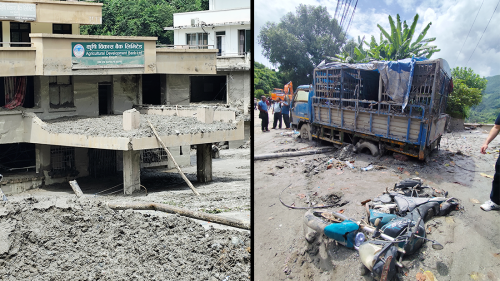
Bidour, Nuwakot district
A-PAD delivered supplies to two hospitals. In addition to medications for chronic illnesses, common sickness, and hygiene products. The hospitals are expected to treat 300 patients in total across the two locations, with enough supplies to cover 10 days’ worth of treatment per person.
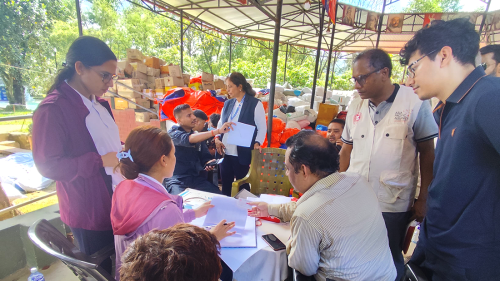
Medical supplies and hygiene products were provided to the field hospital in Trishli, Nuwakot district.
The medical supplies will be provided through government and other networks. The team is also planning to expand the supply of additional relief goods, including high-protein emergency food supplies, electricity, blankets, shoes, towels, soap, and clothing.
A-PAD is also planning a second round of medical assistance and has begun considering subsequent recovery and reconstruction support.
How You Can Help
By Credit Card
READYFOR (Crowd Funding)
https://readyfor.jp/projects/Nepal-flood2026
Yahoo! Donations