








【A-PAD Bangladesh】 International Symposium 2025 – Speaker Summary
2025.10.23
On October 21, 2025, A-PAD Bangladesh and CIS (Community Initiative Society) hosted an international symposium in Dhaka, the capital of Bangladesh.
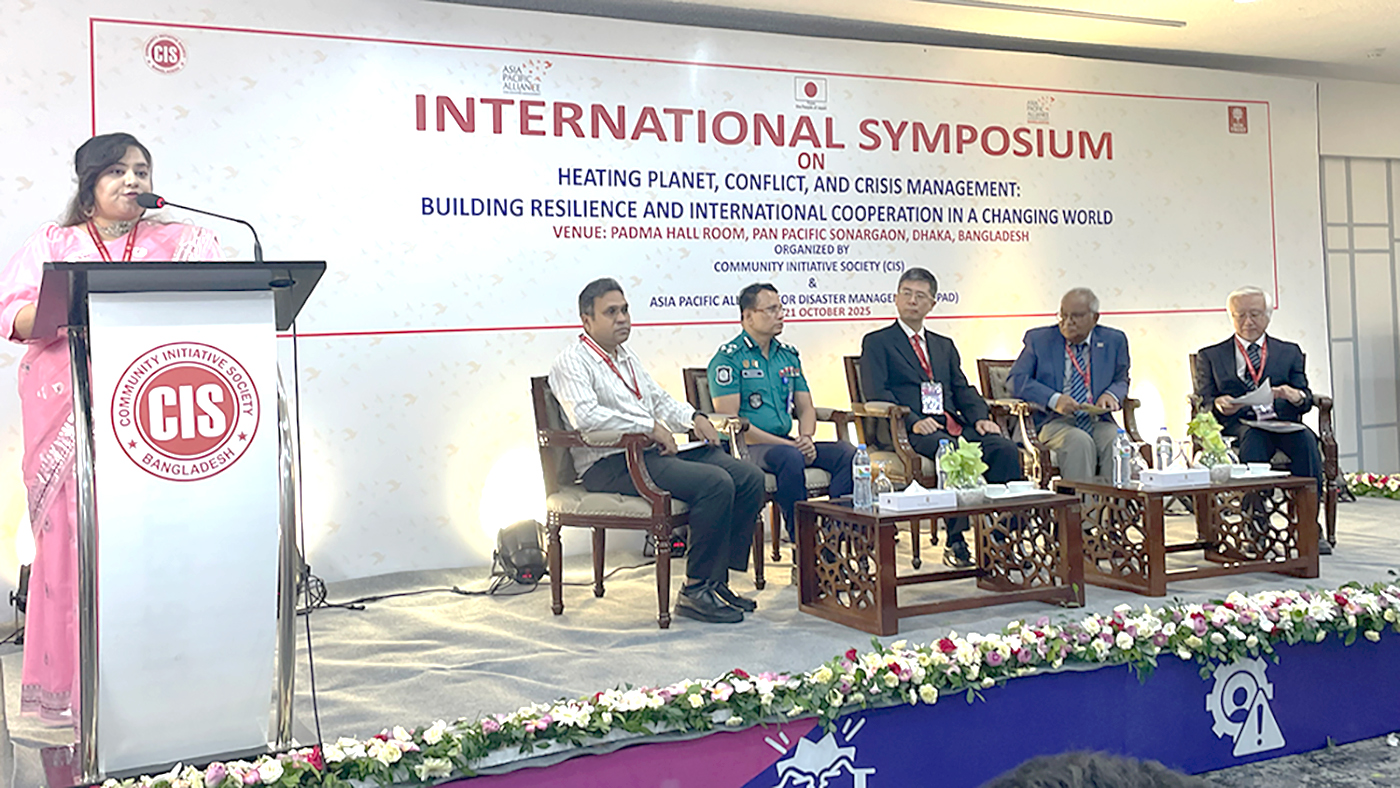
The theme was: “Warming Planet, Conflict, and Crisis Management: Building Resilience and International Cooperation in a Changing World.” The latter half of the symposium featured panel discussions on two themes. Please see the summary of each session below:
Session 1: Building Resilience in Climate-Vulnerable Communities through International Partnerships
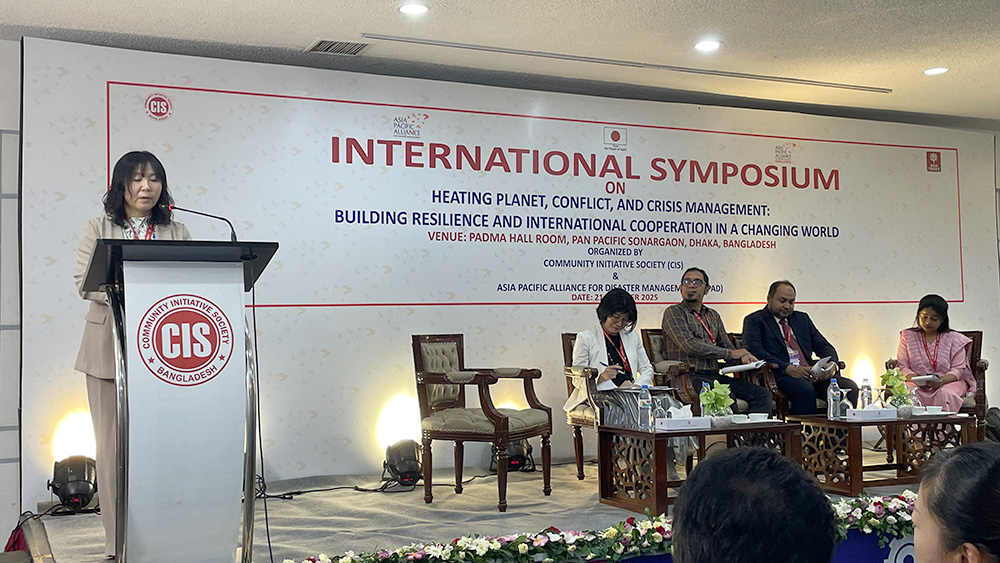
JICA Bangladesh Senior Representative, Ms. Izumi Shoji
“Global Engagement in Climate Resilience: The Role of Global Networks and Exchanges” (Mr. Izumi Shoji, JICA Bangladesh, Senior Representative)
- – Resilience must be co-created with communities, not imposed on them.
- – JICA’s SHEP project helps farmers adapt through crop diversification and peer learning.
- – Climate resilience cannot be imported – must be grown locally, supported globally
“International and Cross-Boarder Partnerships for Strengthening Early Warning Systems and Disaster Risk Reduction in Climate Vulnerable Ecosystems” (Mr. Megumi Kuwana, Professor, Faculty of International Studies Department of International Studies, Kindai University, Japan
- – Only 1% of humanitarian funding goes to anticipatory action/prevention.
- – Japan’s Good Links platform keeps disaster systems functional year-round.
- – Challenge – prevention is invisible, we need new indicators to measure what we prevent.
“Indicators that can assess the effectiveness of resilience building efforts” (Mr. Shams Mansoor Ghani, Assistant Professor, Brac University”
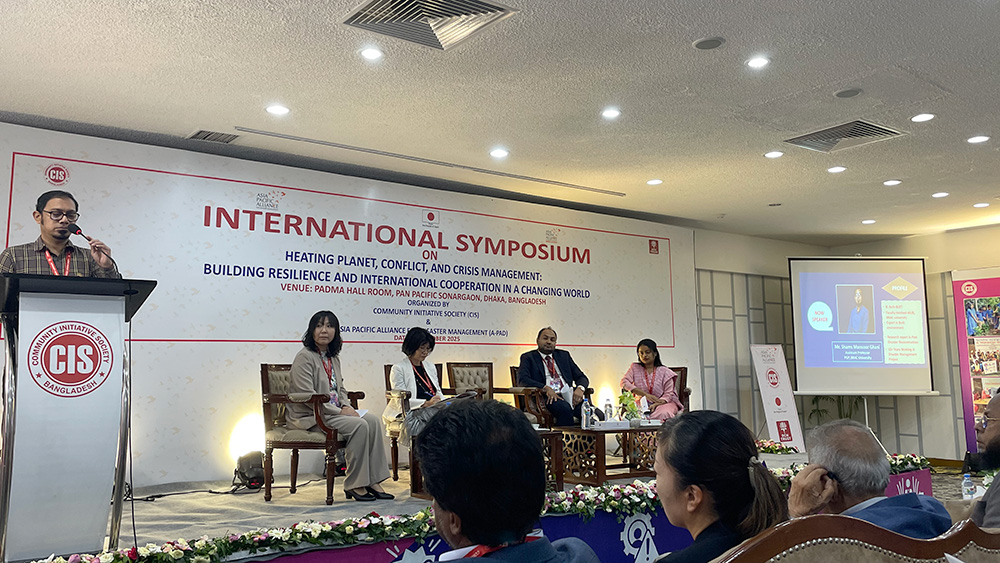
- – Presented seven indicators for measuring resilience – social, economic, environmental, infrastructure, adaptive, capacity, health, and governance.
- – Systematic morning is essential for effective resilience building
“Lessons from Bangladesh: How International Partnerships Support Resilience in Flood-Prone Communities” (Dr. Gazi Jased Ahmed, Professor & Unit Head DCMC)
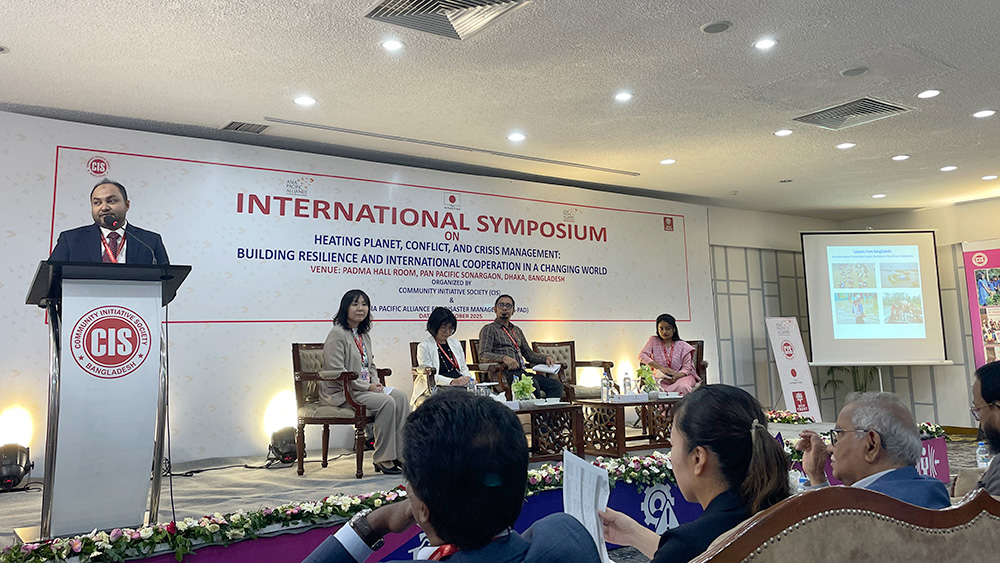
- – Bangladesh is most climate-vulnerable country globally
- – Key partnerships include JICA, DFID, UNDP support infrastructure, early warning, livelihoods
- – Early warning systems have significantly reduced flood casualties.
- – Extreme weather frequency is increasing and it needs sustainable funding
“Gender and Conflict Sensitivity: Double Vulnerability in Crisis” (Ms. Fahmida Alam Bintu, Assistant Professor, Noakhali University of Science and Technology)
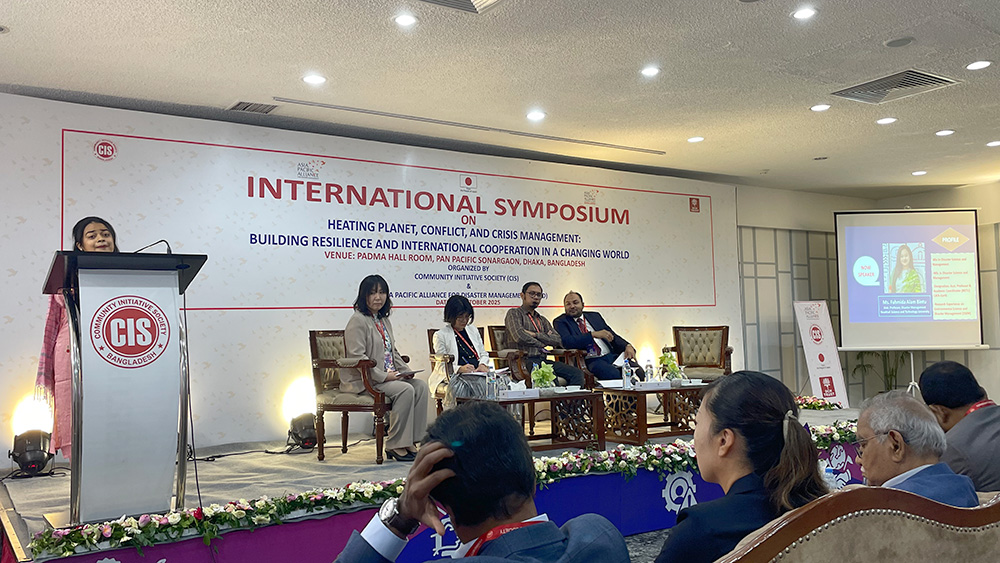
- – It is imperative to promote women’s leadership and social participation during non-emergency times to protect women and children who are often vulnerable during disasters.
- – Disaster prevention and response efforts require a perspective that includes local partnership and gender considerations.
Each panelist shared innovative approaches to strengthening community resilience through international cooperation and sustainable development.
Session 2: Managing Conflict Sensitivity in Humanitarian Programming and Crisis Management Planning
“Community-Driven Humanitarian Response and Preparedness for Humanitarian Emergencies” (Ms. Tahera Ahsan, Japan Bangladesh Chamber of Commerce and Industry, Executive Director”
- – Local communities respond first in disasters – not international aid, such as CPP volunteers, flood board transport, COVID-19 youth-led relief.
- – We must ensure local ownership, leverage local knowledge, and ensure sustainability
“The Role of Social Media in Humanitarian Crises: Navigating Misinformation, Disinformation, and Conflict -Sensitive Communication” (Mr. Firzan Hashim, A-PAD Chief Operating Officer”)
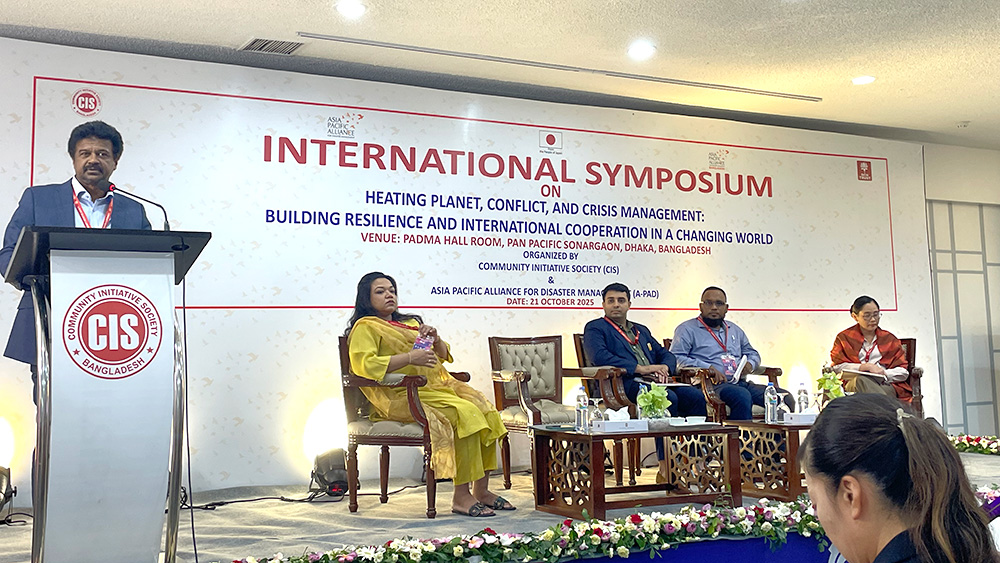
- – Social media prompts paradigm shift from reactive to anticipatory response.
- – Key risks include misinformation and disinformation must be filtered through government sources.
- – A-PAD reaches over 94,000 employees through corporate focal points.
“Youth Engagement in Building Local Capacity for Conflict-Sensitive Programming and Conflict Prevention” (Mr. Muhammad Ferdaus, Brac University, Disaster Management Coordinator)
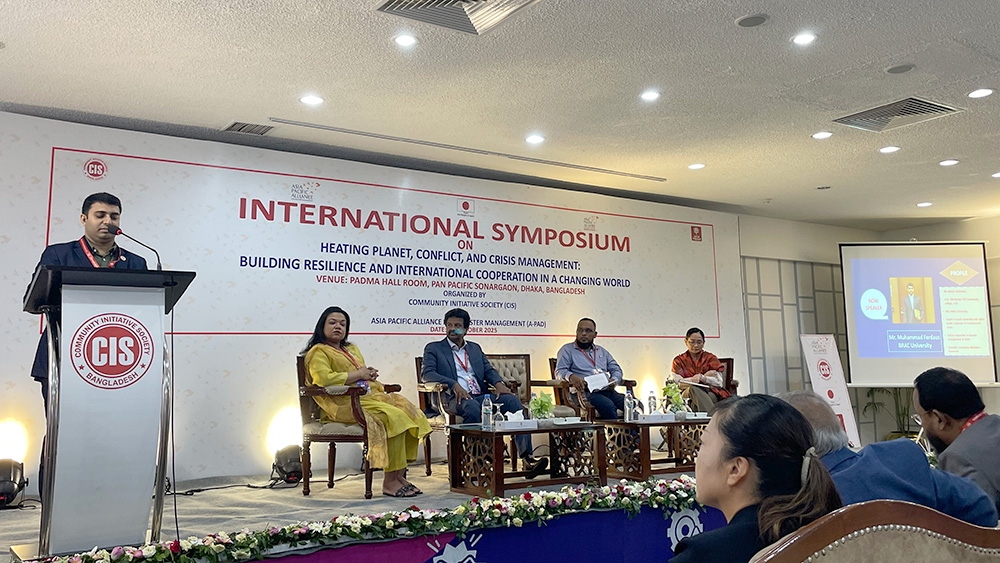
- – Youths make up one third of the population in Bangladesh and step up to become volunteers.
- – CPP volunteers work with no financial incentives
- – We need youth in policy-level decisions and not just implementation.
“Protecting Childhood in Crisis: Community-Driven Humanitarian Response and Preparedness for Children” (Dr. Mohammad Mohinuzzaman, Noakhali Science & Technology University, Chairman, Environmental Science & Disaster Management)
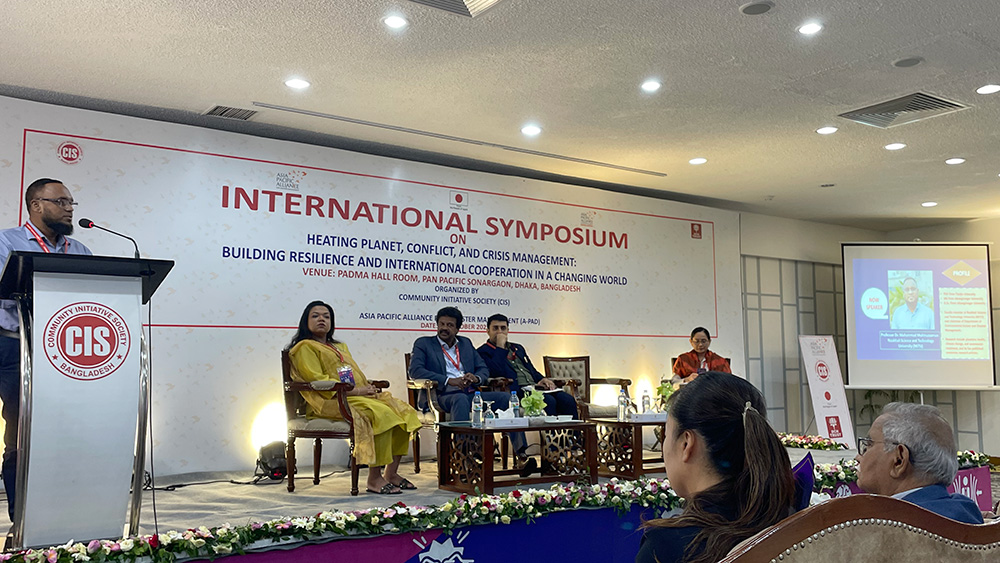
- – In Bangladesh, 40,000 children die annually from drowning
- – Coastal children face malnutrition, disease, psychological trauma, no special disaster facilities.
- – We need child-focused early warning, culturally appropriate infrastructure, mental health support.
- – Communities must involve children/youth with disabilities in planning
“Local Ownership vs. International Support – Striking a Balance in Resilience Building” (Mr. Athea M. Penaloza, A-PAD Philippines, Executive Director)
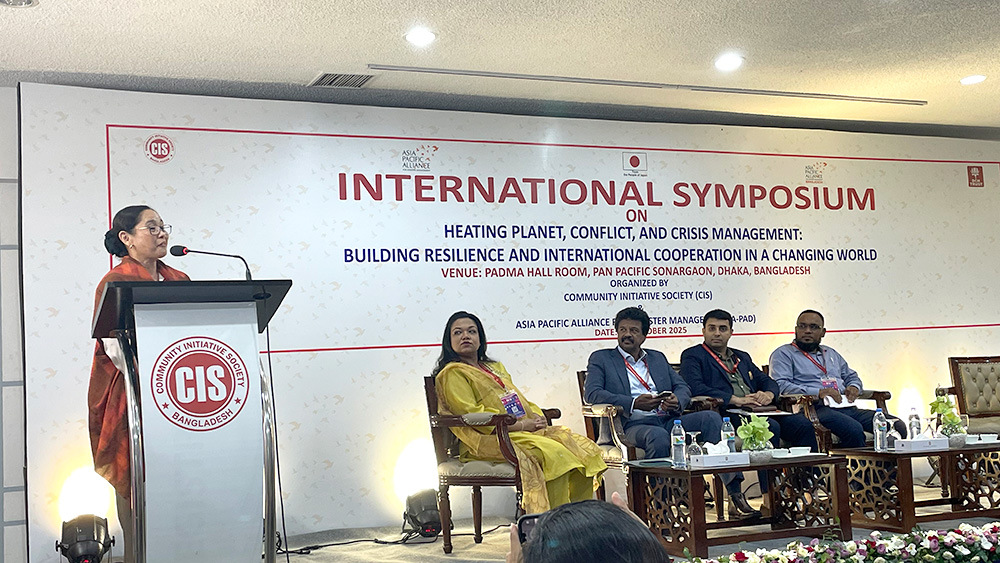
- – It is important to make it as local as possible and as international as necessary.
- – Communities have firsthand knowledge about their risks – they are first to respond and last to leave.
- – International communities can be an unabler but they do not replace local leadership.
Each panelist presented strategies for integrating conflict sensitivity into humanitarian activities, highlighting the importance of comprehensive crisis response while suggesting the use of new technologies and social media.
Through the panel discussions, participants gained deeper insights and awareness from various angles on how climate change, political conflict, and humanitarian crises intersect. This learning will be applied in their respective fields to strengthen resilience against disasters and climate change.